- Sellify Success Club
- Posts
- Google's Circle to Search update: Your customers can now find your products in more places
Google's Circle to Search update: Your customers can now find your products in more places

Ada at Sellify
March 03, 2026
In partnership with

Happy Monday to all 9,866+ unstoppable Shopify builders from sunny Essex!
Apologies for the delay in this week’s newsletter. As usual, Ada here with your weekly dose of ecommerce insights designed to boost your sales by at least 1% this week.
Here is what is inside today’s edition:
Industry: Google’s Circle to Search allows your customers find your store in competitor searches
Growth Hack: Troubleshoot diversity problems in your Meta ad spend.
Weekly Challenge: Run a high-speed creative test
Trend: Protein bagels
Google just turned lifestyle photos into storefronts
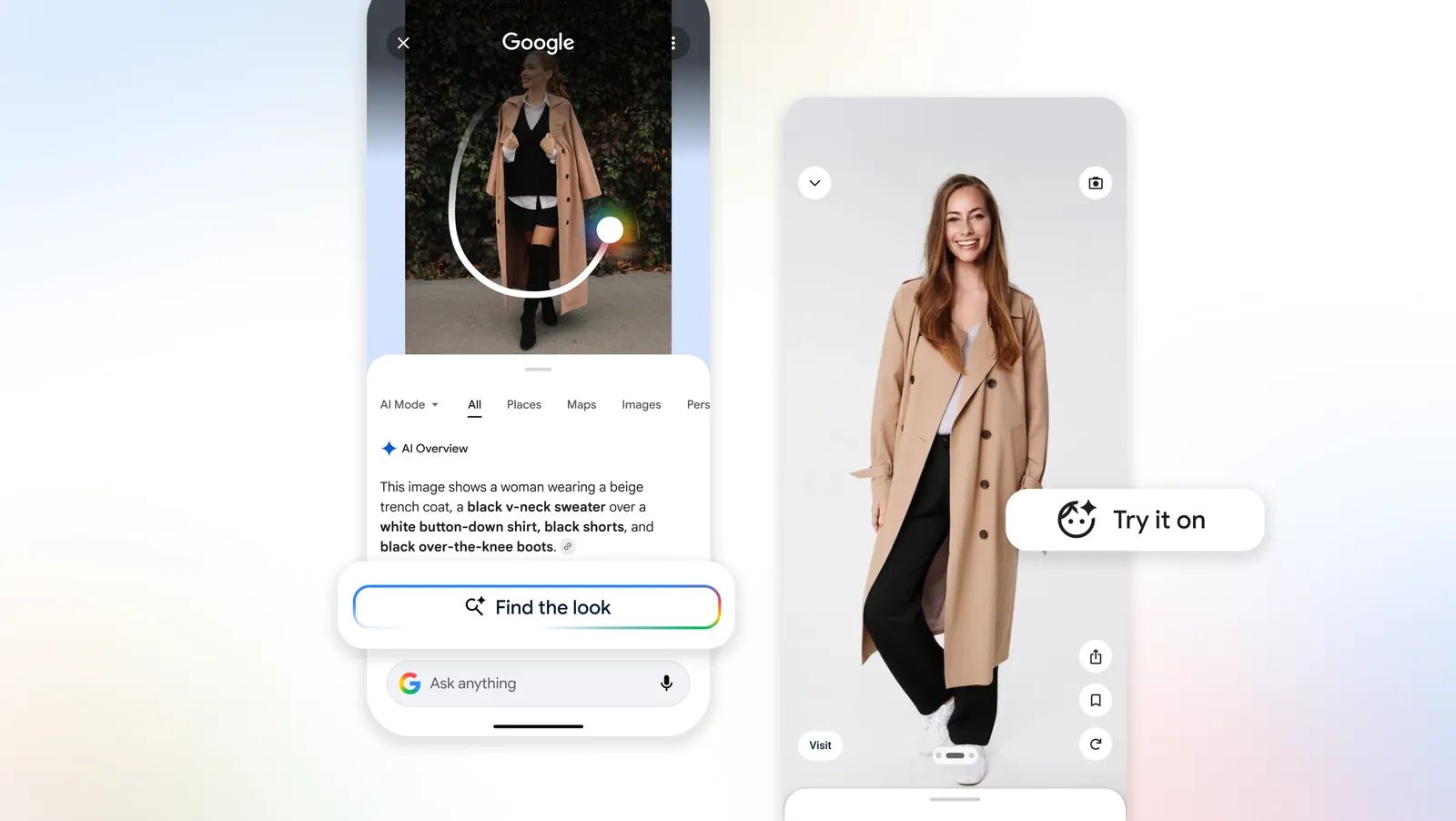
Google just updated Circle to Search, which allows your prospective customers crop, identify, and cross-reference multiple items at once. Previously, your customers could only circle one item at a time; now, they can circle an entire image…like a complete outfit to identify a product you sell and get redirected to your store.
This is yet another opportunity for your products to get discovered. As a fashion retailer, I’m particular excited about the potential for my products to appear in close match searches, for example, where my competitors have run out of stock but but have style influencers still being searched for.
Google’s feature even includes a virtual dressing room feature so users can "Try On" items directly from the search interface.

How to adjust what you’re doing:
Focus on lifestyle photography. If your users are likely to use reverse searches to find look books, etc then your lifestyle photography needs to step up. Ensure that your images feature multiple complementary items from your catalog because if a user circles a whole outfit, you want all the results to lead back to your store.
Master your metadata: Since the AI "thinks through" the image to find matches, your product descriptions need to be literal. If you sell a "Moon Jellyfish" inspired lamp, use those exact terms in your tags to help the AI cross-reference your product.
Tip: If you’re struggling to edit your metadata across all products in your store, use Plug In AI to autogenerate metadata keywords to get your product images discovered faster
Growth Hack: Troubleshoot your Meta creative diversity
“Want to know if your creative diversity is working?
Sort your ad sets by spend over the last 7 days.
If spend is spread fairly evenly across multiple ads, your creative variation is doing its job. The algorithm has options.
If 90% of spend is in your top 2 ads, you've got a diversity problem.
Everything else looks the same to Meta.”

The logic here is that if your spend is spread fairly evenly across multiple ads, your creative variation is doing its job by appealing to different audience pockets. However, if 90% of your spend is concentrated in just one or two ads, you might have a diversity problem. This indicates that your new ads likely look the same to Meta as your existing winners, so the algorithm defaults to the post with the most history.
In Phil’s screenshot, one primary ad is gets over $61,000 spend while the nearest runner-up is at $27,000, and others struggle to break $6,000. If your diverse creatives aren't receiving spend, Meta doesn't see them as having new potential for different customer types. To break this cycle, you must launch ads that use fundamentally different psychological hooks rather than just different versions of the same image.
Still on AI…How visible is your store to ChatGPT/other AI agents (compared to your competitors?)
If you’ve been focused on SEO, you might only be optimizing for Google. But ChatGPT doesn’t “see”/recommend your store the same way Google does.
And that’s where the next decade’s opportunity is.
Today, Sellify Club is offering a free personalized AI insights to qualifying stores for research purposes.
We’re tracking patterns in the way AI agents “sees” and recommends niche Shopify stores, compared to their competitors stores… and if you’re picked, you’ll get:
your personalized AI visibility score
where your store/products shows up (ChatGPT, Perplexity, etc)
where your closest competitors stores/products show up
As I’m doing these manually, I can only accommodate 15 stores over the next week so if you’re interested, please indicate below
Challenge: The 60-Minute Creative Sprint
This week, run a controlled experiment instead of another minor edit.
Identify three fundamentally different angles for your best-selling product: problem/solution, lifestyle aspiration, and logic/spec-driven proof.
Use a high-output service like AdCreative.ai to generate three clearly distinct formats such as an unboxing video, a comparison visual, and a testimonial-driven creative. Launch them together in one broad ad set.
Your goal isn't to find a perfect ad immediately, but to see which style of content the algorithm prefers for your brand. When you provide truly diverse options, Meta can finally find new pockets of buyers you’ve been missing.
The headlines that actually moves markets

Tired of missing the trades that actually move markets?
Every weekday, you’ll get a 5-minute Elite Trade Club newsletter covering the top stories, market-moving headlines, and the hottest stocks — delivered before the opening bell.
Whether you’re a casual trader or a serious investor, it’s everything you need to know before making your next move.
Join 200K+ traders who read our 5-minute premarket report to see which stocks are setting up for the day, what news is breaking, and where the smart money’s moving.
By joining, you’ll receive Elite Trade Club emails and select partner insights. See Privacy Policy.
Trending: Protein Bagels

High-protein eating has moved beyond shakes and supplements into everyday foods. Protein bagels made with Greek yogurt or cottage cheese are currently viral on TikTok, with some videos surpassing 200,000 likes. The appeal is simple: familiar comfort food upgraded to support fitness goals without extra effort. With nearly 70% of Americans actively trying to increase protein intake, demand for “high protein, low friction” foods continues to accelerate.
3 ways to cash in on this trend:
Sell the ingredients, not the bagel: You do not need to manufacture bread. Supplements, seasonings, and protein flour blends position your store as the upgrade that turns ordinary recipes into high-protein meals.
Protein as lifestyle, not fitness: Protein is moving from gym culture into everyday identity. Products that look approachable and aesthetic outperform clinical, performance-only branding.
The Tool Play: Many protein bagel recipes rely on air fryers and simple meal-prep tools. Kitchenware stores can win by creating content around quick, protein-focused recipes that sell convenience rather than equipment.
Stores that frame protein as convenience instead of discipline will benefit most as nutrition continues moving into everyday foods.
Till next Monday,
Ada