- Sellify Success Club
- Posts
- Before redesigning your Store, let AI hoppers test first | Fix your sales tax issues
Before redesigning your Store, let AI hoppers test first | Fix your sales tax issues
one of our readers is looking to buy a Shopify store. Details inside

Ada at Sellify
December 22, 2025
In partnership with

Before You Redesign Your Store, Let AI Shoppers Test It First
Happy Monday to thousands of Shopify store owners who secretly want to redesign their store but are scared to break what’s already working 👋
Ada here, back with another edition designed to help you improve your store by 1% this week, without relying on guesswork or vibes.
Inside today’s edition:
Industry: Get feedback from AI shoppers before going live
Growth Hack: How sellers survive sales tax across states
Weekly Challenge: Stress-test your tax setup in 60 minutes
Trend: Renter-friendly wallpaper
Let’s get in.
P.S Looking to sell your store? One of our readers is looking to purchase an established store with <$500/mo organic revenue. Interested? Email [email protected]
Industry: Want to know what buyers will think of your store redesign? Run a simulation.
Shopify quietly rolled out its Winter ’26 RenAIssance Edition, introducing a wave of AI-powered tools designed to help merchants make better decisions before changes go live. One update stood out to us.
SimGym.
SimGym is a first-party Shopify app that creates AI shoppers modeled on real customer purchasing behavior. They browse your store, navigate collections, add products to cart, and leave qualitative feedback on what worked and what didn’t.
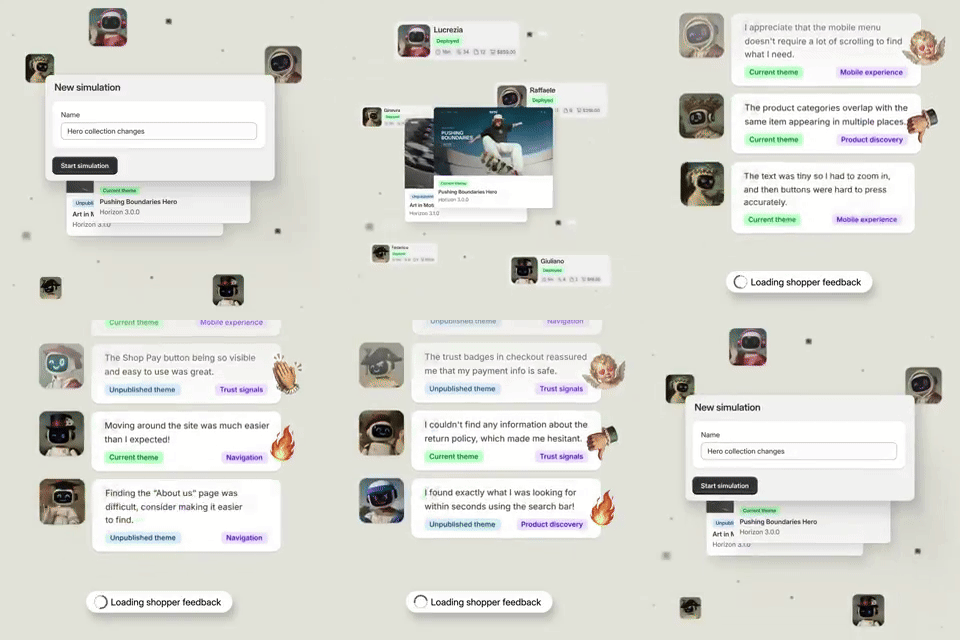
The real value is comparison. SimGym lets you test your live theme against other themes from your library to see which one performs better based on add-to-cart behavior. Instead of publishing a redesign and hoping conversions hold up, you can spot issues early in a simulated environment.
Shopify’s direction is clear. Less guessing. More testing.
Banish bad ads for good

Your site, your ad choices.
Don’t let intrusive ads ruin the experience for the audience you've worked hard to build.
With Google AdSense, you can ensure only the ads you want appear on your site, making it the strongest and most compelling option.
Don’t just take our word for it. DIY Eule, one of Germany’s largest sewing content creators says, “With Google AdSense, I can customize the placement, amount, and layout of ads on my site.”
Google AdSense gives you full control to customize exactly where you want ads—and where you don't. Use the powerful controls to designate ad-free zones, ensuring a positive user experience.
Growth hack: Sales tax is messy, but Shopify can carry more of the load than you think
A Redditor recently asked a painfully honest question:

The short answer is that most don’t do it manually for long.
Once sellers start shipping across state lines, spreadsheets break down fast. Deadlines pile up, notices arrive, and mistakes get expensive. What stood out in the discussion was how many merchants rely on Shopify’s built-in tax handling as a first line of defence.
Shopify automatically calculates sales tax at checkout based on location and current rules. For many small to mid-sized stores, that alone removes a huge chunk of cognitive load. It won’t solve registrations or filings for every edge case, but it does ensure you’re charging correctly at the point of sale, where most costly errors start.
The takeaway isn’t that sales tax is simple. It’s that letting Shopify handle what it’s good at frees you up to focus on growth instead of compliance panic.
Weekly challenge: Stress-test your tax setup in 60 minutes
This week, spend one focused hour reviewing how your store currently handles sales tax.
Check which regions you’re collecting from. Confirm your tax settings are enabled correctly. Review a few recent orders to make sure calculations look right.
You’re not trying to become a tax expert. You’re just making sure your foundation is solid. One small cleanup here can save you months of headaches later.
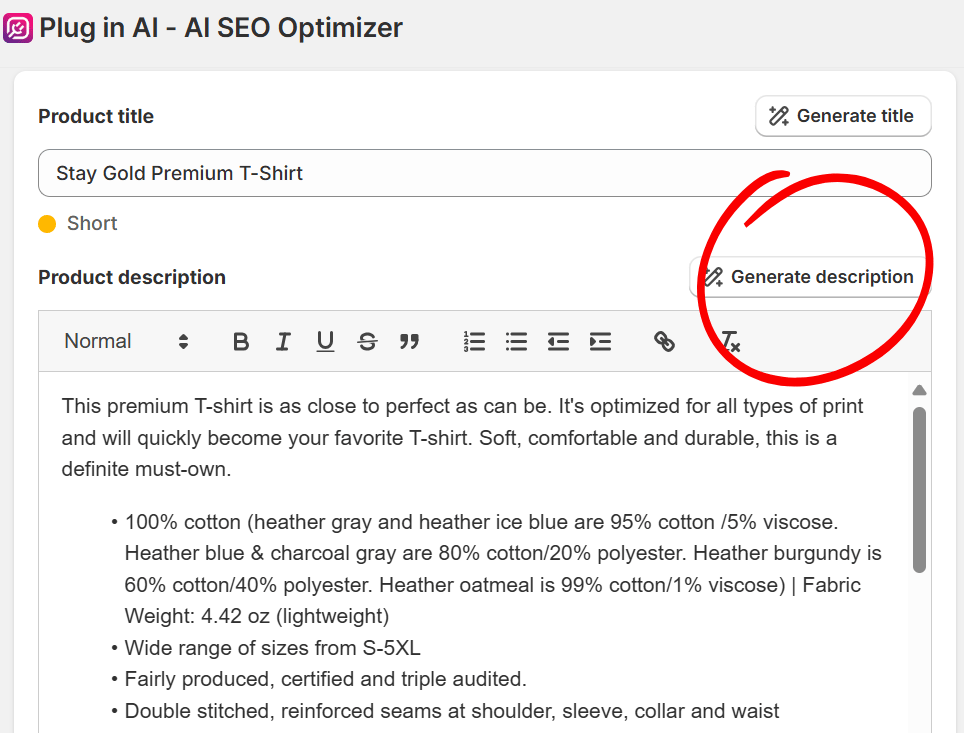
While you’re cleaning up your taxing situation, also take a few minutes to clean up your product descriptions and improve your organic search rankings
Trend: Renter-friendly wallpaper is booming and your store can benefit

Wallpaper is back, and Gen Z is leading the revival. Renter-friendly, peel-and-stick wallpaper lets tenants customize their space without violating lease agreements, making it a perfect fit for today’s renter-heavy market.
The global wallpaper market sits around $1.88B and continues to grow. Top peel-and-stick designs on Amazon generate close to 1,000 sales per month. This trend is part of a broader renter-friendly product wave that includes no-drill curtain rods and removable shelving.
If your store already sells home decor, DIY, or lifestyle products, this is an easy expansion. Position products around flexibility, damage-free installation, and easy style changes. Renters don’t want forever solutions. They want good enough, for now.
That’s it for this week. Fewer guesses, more testing, and smarter foundations.
Till next Monday,
Ada